I decided it’d be fun to start doing this every 5 years, and I’m doing it slightly ahead of schedule (the first one was Feb 2021) because it’s easier to do it in 5/0 years instead of 6/1 years. The result is very different from the first time for a few reasons: The last list led to me revisiting and reconsidering many games, I’ve played another 300+ new games since making it, and I used a slightly obsessive ranking methodology this time that should be both less random and less influenced by recency bias than what I did before. More on that at the end if for anyone who cares.
This list represents about the top 9% of games I’ve liked enough to play significantly, so even this lowest ranked batch is still far above average. Let’s get to it.
Nobody’s 2025 Top 100 Games: 100-91
Nobody’s 2025 Top 100 Games: 90-81
Nobody’s 2025 Top 100 Games: 80-71
Nobody’s 2025 Top 100 Games: 70-61
Nobody’s 2025 Top 100 Games: 60-51
Nobody’s 2025 Top 100 Games: 50-41
Nobody’s 2025 Top 100 Games: 40-31
Nobody’s 2025 Top 100 Games: 30-21
Nobody’s 2025 Top 100 Games: 20-11
Nobody’s 2025 Top 100 Games: 10-1
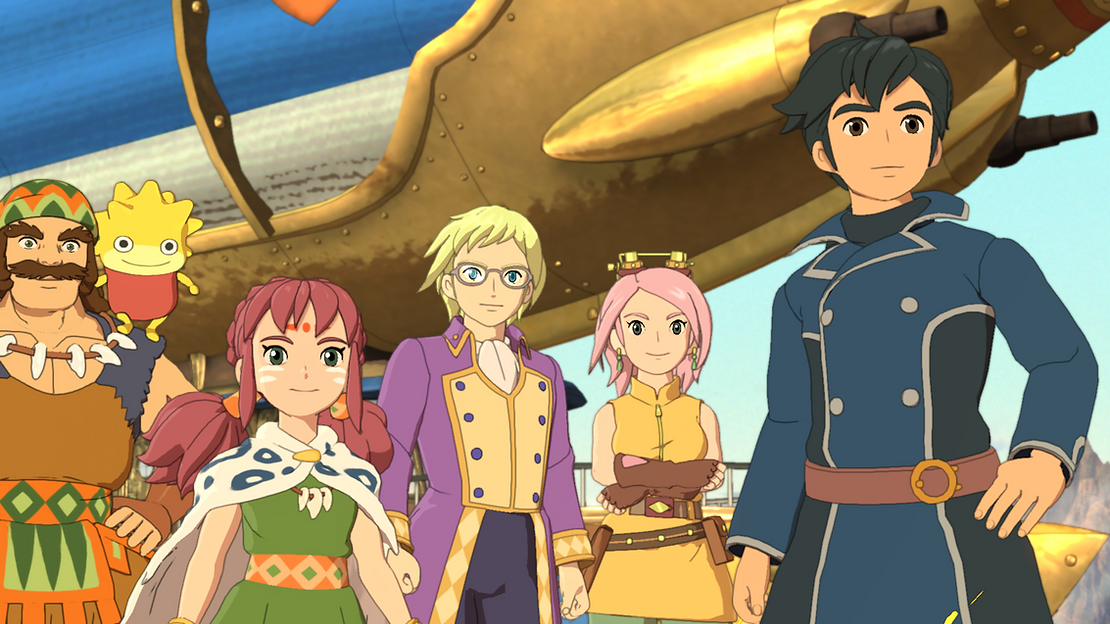
100: Ni no Kuni II: Revenant Kingdom

Like a lot of games on this list, Ni no Kuni II is a game that doesn’t succeed at everything it tries to do, but that makes up for its failures with some brilliant successes. It has the same charm and beautiful graphics as the first Ni no Kuni, but ditches that game’s tedious combat in favor of a fast-paced system in which every character plays very differently. Exploration and sidequests feel rewarding thanks to feeding into the kingdom building minigame, which itself provides a constant stream of unlocks and new bonuses throughout the campaign. It has the looks and systems to beat most of the other RPGs on this list but is unfortunately stuck with an underwhelming story and dull music, so it sneaks onto the list in the last spot.
Previously: 54
99: The Elder Scrolls V: Skyrim

Like a lot of people, I’ve played enough Skyrim to pretty much be at my limit with it. I may never play it again, but for as much as it undeniably was a buggy mess with too many draugr, it was also an exceptional exploration experience. You could start walking in any random direction and have good odds of finding something new and interesting before long. Even if you ended up in yet another bandit camp or draugr tomb, there was more than likely something about that particular one that stood out. Sometimes it was just a bit of interesting geography or a more difficult fight, but other times you’d find a new shout, quest, or fancy item. In the best case, you might find a new town with its own special quest or one of the intricately designed Dwemer dungeons. It’s no longer the king of this sort of exploration, but remarkably few games have caught up considering that there’ve been 14 years to do so.
Previously: 91
98: Dragon’s Dogma

Even more than most games on this part of the list, Dragon’s Dogma is a game that succeeds by doing one thing very well. In this case, it’s combat against giant monsters. I can look past the generic story, boring music, repetitive dialogue, and even the excessive backtracking because it’s just so remarkably fun to fight its bests. Whether you’re going up against a griffin, a cyclops, or even a beholder, they all their own tricks and quirks to make the fight unique. And once you’ve mastered a particular enemy, you can always change to a different class and fight again to get an almost completely different experience. Last year’s sequel is even better in some respects, but it narrowly missed the list due to also building on the first game’s frustrations.
Previously: 82
97: Sid Meier’s Civilization V

Civ V is my second favorite in the series, but it was the first one that really made each civ feel different. The most extreme was Venice, which could only ever build a single city, but the others all had their own gameplay twists to go beyond the slightly different unique units and standardized bonuses seen in previous games. It also moved the map to hexagons from squares and banned having multiple units on a single tile, which made combat more tactical instead of just being able building the biggest stack possible. Other than the difficulty of using mods in multiplayer, there’s not really anything I don’t like about this entry. The gap between this and the much, much higher ranked Civ VI are down to that games strengths rather than any flaws here. It’s still a solid experience.
Previously: 60
96: The Forgotten City

The Forgotten City actually started life as one of millions of mods for Skyrim, and you can still see a bit of that DNA in the standalone release from 2021. Just a little bit, though. Instead of being a big open world RPG, TFC is a mystery game in which you are trapped in a time loop in a small Roman town. You and all other residents are bound by The Golden Rule: if anyone commits a sin, everyone is turned to gold. In order to break the loop and return home, you need to determine who plans to break the Rule and avert the catastrophe before it happens. Although it suffers from the same problems with repetition that all time loop games do, it more than makes up for it with an intricate world that just keeps revealing more secrets the deeper you look. The final hours in particular are remarkably well done.
Previously: Unreleased. It launched in standalone form about 4 months after my list.
95: Pokemon Heart Gold and Soul Silver

HGSS makes the list as the best version of Gen 2, at least among the official options. I will forever have a soft spot for the novelty of exploring two regions in one game as well as the designs of Johto’s new Pokemon, and HGSS offers it all with improved battle mechanics and an expanded Pokedex. It still has the same classic issues with there being a few massive level spikes in the game that can only really be solved with grinding, though, and that’s why it can’t go any higher than 95. It’d take modders to show what could be done with this region with a bit more care to the pacing.
Previously: Did not make the list
94: The Legend of Zelda: The Wind Waker

I started to write something new, but it was basically the same thing I wrote five years ago. My opinion of Wind Waker has been steady for a decade or so, turns out, so might as well reuse and recycle here:
This has fallen a lot since the first time I played it. It was one of the first 3D console games I ever played, and the sense of exploration was unmatched for years. But bigger games have come out in the 18 years since its release, and many of them have far more interesting things to find. Its world isn’t particularly special anymore, and its dungeons honestly never were. Still, it has a wonderful art style that is as beautiful now as it was then, and its OST is quite possibly my single favorite. And since the art and music are with you every step of the way, they can make up for flaws in its other parts.
Previously: 83. The drop is basically just from new games appearing.
93: Emperor: Rise of the Middle Kingdom

Emperor is a game about building ancient Chinese villages from the ground up. It uses a system that’s only really shared with Anno nowadays in which every house has needs and will upgrade into a better one that fits more people once you meet them. Unlike Anno, almost all of those needs are met by “walker” characters that patrol the city and provider their abilities or resources to houses they walk past. You don’t have much control over their movements beyond how you lay out your roads, so city design is a crucial factor and success is as much due to the efficiency of your road network as to your economy and infrastructure. Most of its problems are simply due to being a 20+ year old game – the online play has always been dead, it runs at a comically tiny resolution, and the AI is dumb as a brick. I hope that this is eventually replaced by a newer game that brings its ideas into the modern age, but for now, this particular type of city builder peaked in 2002.
Previously: I think I forgot to include it in my ranking pool
92: Tape to Tape

Tape to Tape achieves the impressive feat of making the list despite still being in Early Access. When you have an idea as good as roguelite hockey, it doesn’t really matter if your idea is fully finished or not. You’ll take a team of lovable losers through a journey to defeat increasingly absurd opponents and win the hockey macguffin. Along the way, you’ll pick up crazy abilities, gain stat boosts and magic equipment for your crappy players, and take on challenges that award all sorts of bonuses. Best of all, you can play up to 5 player co-op and have every player on the team be someone in the room. Scoring a goal is a blast even when you’re by yourself, but it’s exhilarating when your couch co-op team comes together to score at the last second and win the game. I fully expect this to be much higher after it’s finished.
Previously: Unsurprisingly, it did not exist in 2021
91: Total War: Medieval II

This is one of a couple of Total War games that made the list, and they all share a basic premise of being grand strategy 4X games where you also get to direct your battles in real time. It’s loads of fun in almost every iteration of this series, so their ranking largely comes down to how fun their settings and factions are. Medieval II scores points mostly from the first box. Europe provides a huge and diverse area to conquer, with maps covering mountains, forests, beaches, deserts, and even impressively large city battles. Mods can add faction variety that the base game lacks, with the most ambitious fully converting the game to a Lord of the Rings or Legend of Zelda setting that lets you smash armies of fantasy creatures against each other.
Previously: 87
That’s it for batch 1! This probably will not be a daily series like last time because it’s a lot of work and I have travel coming up, but hopefully it won’t take too long to get through the rest of the list.
Nobody’s 2025 Top 100 Games: 100-91
Nobody’s 2025 Top 100 Games: 90-81
Nobody’s 2025 Top 100 Games: 80-71
Nobody’s 2025 Top 100 Games: 70-61
Nobody’s 2025 Top 100 Games: 60-51
Nobody’s 2025 Top 100 Games: 50-41
Nobody’s 2025 Top 100 Games: 40-31
Nobody’s 2025 Top 100 Games: 30-21
Nobody’s 2025 Top 100 Games: 20-11
Nobody’s 2025 Top 100 Games: 10-1
My obsessive ranking strategy for anyone who cares: I started with the full 1100-ish games I’ve finished plus a handful that I’ve at least played enough of to know they deserved a shot. Then I cut that down to 500 that at least had a faint hope of making the list and ranked that using pubmeeple.com. Their ranking engine is just quicksort, which means it assumes that a > b and b > c means a > c and only does the minimum number of head-to-head comparisons to create a ranking. This means it’s very fast to produce a ranking, but you might end up with very different results from doing it twice depending on how consistent you are. To make up for that, I did a series of cuts and rerankings to end up with 125 candidates, then ranked them three times while dropping any that were clearly not going to reach the top 100. The final ranking is the average position across the three runs with ties broken by best individual placement. This was far too much effort.