Today’s batch features five big drops and five newcomers to the list. It almost looks like I planned it this way, but the ranking averages just worked out nicely. To the games!
Nobody’s 2025 Top 100 Games: 100-91
Nobody’s 2025 Top 100 Games: 90-81
Nobody’s 2025 Top 100 Games: 80-71
Nobody’s 2025 Top 100 Games: 70-61
Nobody’s 2025 Top 100 Games: 60-51
Nobody’s 2025 Top 100 Games: 50-41
Nobody’s 2025 Top 100 Games: 40-31
Nobody’s 2025 Top 100 Games: 30-21
Nobody’s 2025 Top 100 Games: 20-11
Nobody’s 2025 Top 100 Games: 10-1
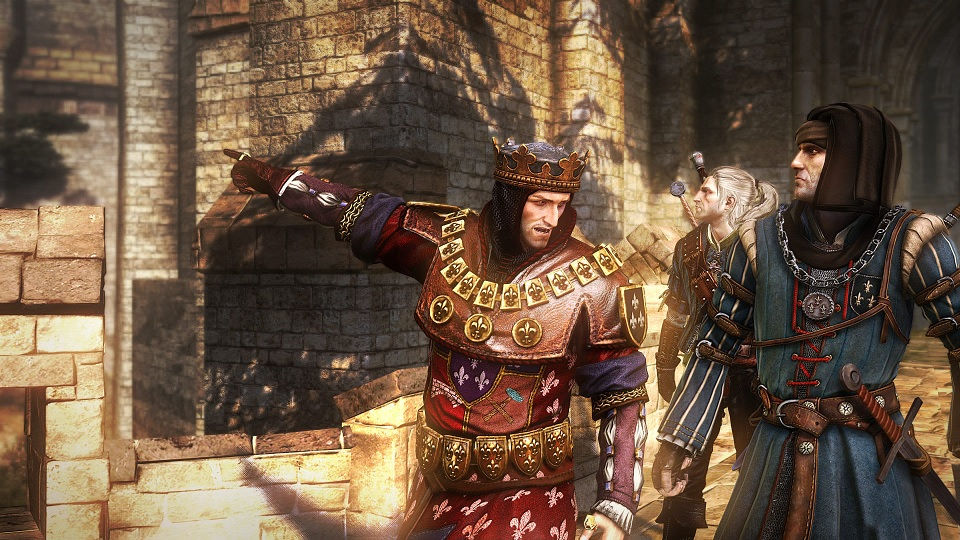
90: The Witcher 2: Assassins of Kings

CDPR’s Witcher trilogy is probably the biggest leap in quality across three games ever. The first game is a bit crap to the point that I never finished it. The third game will be a bit less than 90 places higher on the list. That leaves the middle child, which ditches the original’s clunky combat and stiff story in favor of a medieval intrigue-athon that provides an impressive amount of player choice. It’s nothing nearly as wild as the scale of options on offer in TW3, but you’re still able to make a few choices that massively change the story, including one early on that effectively splits the story in two permanently. CDPR largely left it behind by having TW3’s story reference this game’s plot only tangentially, but there were neat ideas here that are still worth checking out today. Only a few other games have done the medieval violence genre better.
Previously: 63
89: Mass Effect 2

Mass Effect 2 is a complicated one to talk about. It’s deservedly known for one of the best and most exciting finales in all of gaming, and that sequence is hardly diminished by knowing how it works behind the scenes. Companion loyalty quests were a brilliant addition that’s been copied by basically every major RPG since, and it did a remarkable job of expanding on the characters and societies introduced in the first game. Like with TW2 above, the sequel is almost 90 places ahead of this one, but unlike TW2, ME3 could not possibly have been what it is without this game as a foundation. So why is this so far behind its siblings? This is an extremely uneven experience where some of gaming’s greatest characters rub shoulders with forgettable losers and all time classic moments are immediately followed by three completely pointless side quests. If you don’t have a compulsion to do everything like I do, and can accept that there are consequences in the good parts for skipping things, then you can have a top 30 or maybe even top 20 experience here by simply pretending half the cast doesn’t exist and only doing the best moments.
Previously: 64. This and TW2 are apparently glued to each other, and they both dropped because of other RPGs with fewer rough edges.
88: BioShock

Ah, BioShock. Even though this is number 88 on my list, I can’t really argue with anyone who puts this in their top 10 or even higher. The first hour or so is basically a nonstop sequence of unforgettable moments and may be the best introduction to any game. It also builds up to one of gaming’s most famous plot twists, and even if you know it’s coming, the execution is nearly flawless. The entire experience is incredibly atmospheric and so distinct that you can grab just about any random background asset or voice clip and immediately know what game it’s from. It inevitably has problems with controls and UI communication as a late 2000s game, but all discussion of this game always eventually comes back to the same point: It doesn’t end after the famous twist, and everything that follows that moment is completely pointless and tedious. It’s a masterpiece with some unfinished mediocrity glued on to the end. Normally that’s the sort of problem that would be solved by a sequel that had more time in the oven but, alas, both sequels have their own troubles.
Previously: 65. I’m glad these three stuck together in the rankings.
87: Subnautica

Subnautica doesn’t break the pattern of this post. As an exploration game, it’s pretty much unmatched. You start in the middle of an alien ocean that extends for several kilometers in any direction and are tasked with shutting down the defense system that shot down your space ship as well as building a new rocket to escape. The gameplay loop basically consists of swimming in a random direction until you can’t progress further either because you need better technology or you’re too scared of some terrifying new sea monster you’ve discovered. Then you go back to base, build upgrades, and try again. It’s all excellent until you reach the deepest part of the ocean and find out that beating the game is going to require a whole lot of trudging back and forth that sucks all of the tension and discovery out of the experience. I ended up using cheats to skip all that and see the credits.
Previously 31. Now it lives in the 80s with all the other flawed masterpieces. I was too forgiving of the endgame last time.
86: Like a Dragon: Infinite Wealth

The pattern continues. Infinite Wealth has all the great characters and fun twists of Ichiban’s first adventure, but it is also way too damn long. It makes the list because it managed to hold my attention for 127 hours and is stuffed full of memorable insanity along the way, but it would have been even better if they’d kept it to the first game’s 90 hour run time and focused on the core content a little more. But unlike most games that are too long and needed more focus, there’s very little here that’s actually bad. Even the worst minigames are decent, and even the least memorable quests are still worthwhile. Nothing here compares to the best moments in Mass Effect 2 or Subnautica, but it makes the list anyway because it’s a remarkable accomplishment to make a game this long that never truly stumbles.
Previously: Unreleased.
85: Final Fantasy VII Remake: Episode INTERmission

Alright, time to kill that pattern. My praise for Remake‘s epilogue DLC is unqualified: this is simply a great short RPG that distills the base game to all of its best parts. It doesn’t rank higher because there is a limit to how great an intermission was ever realistically going to be, but it’s basically at that limit. It has some of the best fights in the game, a great new minigame, nails the pacing of its story, and somehow still finds time for some fun sidequests and a lot of songs about turtles. I played through this in barely more than one sitting and had no regrets.
Previously: Unreleased.
84: The Legend of Zelda: The Minish Cap

Minish Cap is my favorite Zelda game and has been for a long time. It’s pretty close to flawless for what it wants to be. All of its dungeons and boss fights are excellent, it has creative items that often have multiple uses, and only the Royal Crypt ever really feels tedious on replays. If you want to go for 100%, there are a tremendous number of sidequests and hidden areas that reward you with everything from simple heart pieces to crazy item upgrades that change how you play. Although its art style originated with Four Swords, it builds upon it well and has the series’ best art outside of Wind Waker. There’s even a soundtrack that has no business being as good as it is with the limitations of the GBA. It’s down to 84 only because I’m increasingly a story-first gamer, and Zelda never has that as a priority.
Previously: 42. Blame new games and number 71.
83: Chained Echoes

For reasons I will never understand, everyone compares Chained Echoes to Chrono Trigger even though it has nothing in common with that game beyond its art style and has shamelessly stolen almost its entire plot and world from Final Fantasy XII. Stealing your story from a game I don’t really like would not normally lead to a spot on this list, but Chained Echoes makes up for it with what is without a doubt the best exploration in all of JRPGs. Where most of the genre is content with dead ends that lead to treasure chests and a few obvious NPCs who have optional side quests, CE absolutely crams every map full of secrets and quests. Better still, the rewards are genuinely exciting and worth the effort of backtracking when you get a new ability. Unlike most of the other games in this part of the list, you’re likely not going to enjoy this one unless you go out of your way to dig into the content. The main line quest is just there to provide a structure for all the secrets.
Previously: Unreleased.
82: Minishoot’ Adventures

Minishoot’ Adventures looks like a generic twin stick bullet hell, but is actually a very creative Zelda-like. Its soundtrack is nothing special, but otherwise it’s special for largely the same reasons as Minish Cap: great dungeons, fun boss fights, and tons of secrets to find. It ranks slightly ahead of MC because of the last point. Although it can’t compare on music and has an even more threadbare story, Minishoot’ provides a relentlessly focused experience that makes use of nearly every inch of its map for some mixture of required and optional content. The twin stick combat provides an easy structure for meaningful upgrades as well as a great way to escalate the difficulty of boss fights. You can earn points to upgrade all the movement and attack parameters of your ship as well as find heart pieces to get more health, but the enemies will also get stronger, develop more complicated bullet patterns, and start appearing in greater numbers. As long as you like both genres, you really can’t go wrong here.
Previously: Unreleased.
81: Paranormasight: The Seven Mysteries of Honjo

Paranomasight is just so stylish. It is thoroughly a game about a time and place: the early 1980s in Tokyo’s Sumida ward, formerly known as Honjo. Nearly everything about it ties into that theme. The art is modeled after 80’s anime, the story takes place in faithful recreations of Sumida landmarks, and the newfangled technology and social mores of the time play a critical role in the plot. You’ll play as one of a number of characters who have suddenly and mysteriously become curse bearers, people who’ve been chosen by curse stones that grant the power to kill anyone who satisfies certain conditions. If anyone manages to fill their curse stone with spirit dregs, they can resurrect a person of their choosing, but only other curse bearers provide a meaningful amount of spirit. This sets up a plot that does an excellent job blending the traditional and the innovative just like its world. It frequently breaks the fourth wall to set up puzzles, but it also hits a lot of story beats that are very grounded in either the real world or the traditions of this genre. It skillfully moves between horror, comedy, and heartfelt moments without diminishing any of them. And all this would make for a higher placement except that somewhere in all the ambition, it forgot to pay attention to some basic usability concerns. Unlocking critical late game content is requires taking steps that are not communicated at all and the final sequence is a pain to trigger even once you’re used to the game’s quirky hidden state tracking. The mystery piece of the story also doesn’t really hold up to a second playthrough. The horror sequences and character writing are still strong, but once you know what’s going on, there isn’t a lot of foreshadowing or callouts that can keep you interested in a second experience.
Some killer music, too. I couldn’t find a place to say that.
Previously: Unreleased
Next time: A bunch of RPGs and some trouble oop norf’.
Nobody’s 2025 Top 100 Games: 100-91
Nobody’s 2025 Top 100 Games: 90-81
Nobody’s 2025 Top 100 Games: 80-71
Nobody’s 2025 Top 100 Games: 70-61
Nobody’s 2025 Top 100 Games: 60-51
Nobody’s 2025 Top 100 Games: 50-41
Nobody’s 2025 Top 100 Games: 40-31
Nobody’s 2025 Top 100 Games: 30-21


