Nobody’s 2025 Top 100 Games: 100-91
Nobody’s 2025 Top 100 Games: 90-81
Nobody’s 2025 Top 100 Games: 80-71
Nobody’s 2025 Top 100 Games: 70-61
Nobody’s 2025 Top 100 Games: 60-51
Nobody’s 2025 Top 100 Games: 50-41
Nobody’s 2025 Top 100 Games: 40-31
Nobody’s 2025 Top 100 Games: 30-21
Nobody’s 2025 Top 100 Games: 20-11
Nobody’s 2025 Top 100 Games: 10-1
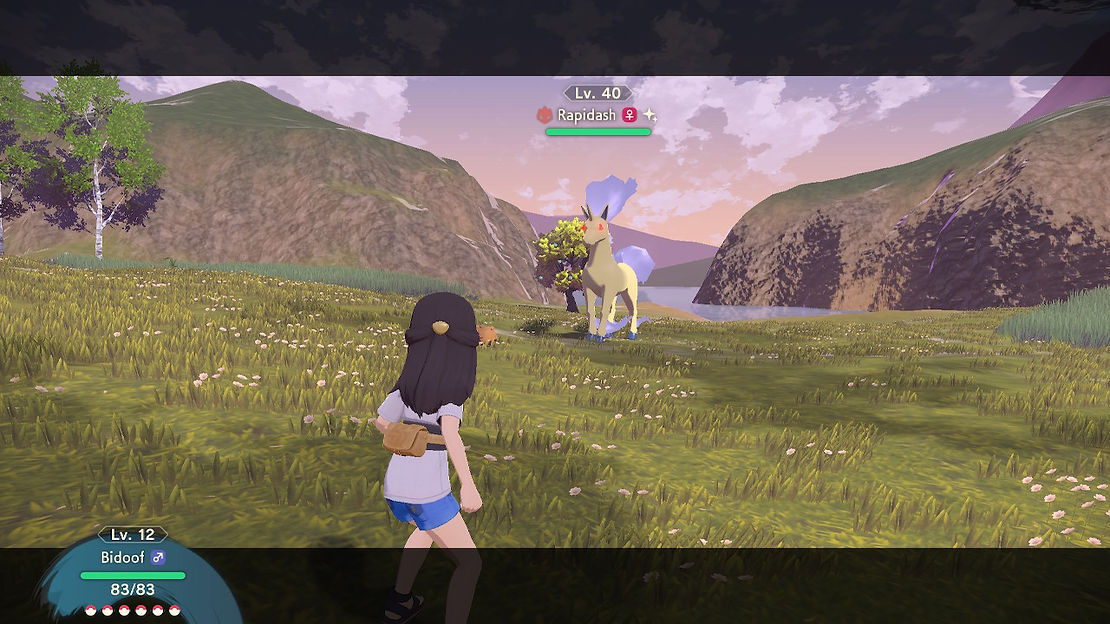
60: Pokemon Legends: Arceus

Arceus is my favorite official Pokemon game. As much as I love the main series, I’ve gotten a bit sick of the RNG-based catch system and always wanted something that delivered more on the exploration from. SV and SS tried to do that with their open worlds, but it’s Arceus that really succeeded by casting you as more of a naturalist than a trainer. Semi-traditional combat still plays a role, and the game actually features one of the hardest turn based fights in the series, but you’ll spend most of your time completing tasks in order to learn more about each species. Even if there are still plenty of things to improve on, this is a solid foundation for a spinoff series and I loved almost every minute of my 80 hours with the game.
Previously: Unreleased
59: Mario Kart: Double Dash!

I love the idea of kart racers, but most of them don’t quite work for me because they either can’t find the right balance between silly items and rewarding skill, or they can’t balance having interesting setpiece tracks with being visually comprehensible and easy to navigate without memorization. Double Dash! isn’t the only game to nail those tradeoffs, but it remains the one to do it best. Every item can be countered with the right technique and every track is visually clear, but it still makes room for powerful item combinations and sticking a dinosaur in the middle of one track. There’s a flow to playing it that has only ever really been matched by one other game.
Previously: 53
58: Death’s Door

Death’s Door is my favorite Zelda game. It isn’t an exact match for what the series used to be, and it certainly has nothing to do with what it became, but it’s what I always wanted from Nintendo’s little green stabby dude. Great boss fights, fun dungeons, and enough side content that it’s worth getting sidetracked. Death’s Door has all of that while also taking some ideas from Dark Souls and the devs previous game, Titan Souls, to sharpen combat. I liked it enough to immediately do a second playthrough in the challenge mode (never using a real melee weapon) after finishing it for the first time. This might not be the only game I’ve ever done that with, but it is certainly one of very few.
Previously: Unreleased
57: Warhammer End Times: Vermintide

It took me ages to give this game a shot because Warhammer as an IP as very unappealing, but Vermintide is easily able to overcome that hurdle. At face value, this is just a melee-focused Left 4 Dead with ratmen instead of zombies. That’s already a big improvement since zombies are boring, but it also brings maps that get truly wild. The wizard’s tower level is one of my favorites in this whole genre of games. The sequel is in some ways even better, but I haven’t finished it yet, so it’s the original that makes the list.
Previously: I didn’t play this until much later
56: The Last of Us: Left Behind

Did I just say zombies are boring? Not to worry, they still are. Luckily, they’re not really all that important to the story here. It’s a DLC that alternates between a winter scene from the middle of the base game and a summer scene from long before the story began, but in both cases you’re exploring an abandoned mall as Ellie. Zombies feature, but they could as easily have been any other apocalypse. The real draws are the stealth action in the winter scene and the carefree exploration in summer. It’s an excellent contrast that really elevates each half of the experience, honestly all the more so because the summer part could easily have taken place in a non-apocalyptic mall that was merely closed.
Previously: 14. I don’t know what was going on with my 10-20 last time, but it had a lot of games that I’m pretty sure I’ve never ranked that high except in that specific week when I did the rankings.
55: No Case Should Remain Unsolved

There’ve been quite a few games that succeed despite doing nothing innovative, so how about one that succeeds primarily because it’s so innovative? No Case is a mystery game that takes place almost entirely in a handful of text threads representing conversations and phone calls that happened somewhere in the story. The catch is that each new thread you get is almost entirely out of context. You don’t get to know who is speaking, when they were speaking, or which conversation history it belongs in. If you’re able to assign the correct speakers and place the snippet in its correct place, you get access to keywords that unlock new pieces or sometimes even entirely new threads and speakers. The final mystery isn’t the most mindblowing thing to ever come out of this genre, but the journey to get there is unique and the final sequence is executed extremely well.
Previously: Unreleased
54: Duelyst

Duelyst was a mashup of a card game like Hearthstone and a tactical RPG. Each player had a general and the goal was to use the units and spells in your deck to kill the other general before the same could be done to you. Amazingly colorful art and creative faction design helped carry an already good idea to the next level. Unfortunately, it went offline years ago and you can’t play it anymore. It did actually get a sequel in the last few years, but I haven’t played that enough to include it here, so instead we all get a pretty picture of a dead game to look at.
Previously: 16. Again, no idea what was up with 10-20 last time.
53: Theatrhythm: Final Bar Line

Final Bar Line is the last game in Square’s rhythm celebration of Final Fantasy, and it’s hard to imagine a better sendoff. The rhythm system from previous games was already excellent, but FBL builds a robust RPG around it where every character can level up and learn skills as you play songs with them. That’s important for the campaign mode, where you can play through the soundtrack of every Final Fantasy game and fight enemies and bosses from the original title. If you want to take down Kefka in “Dancing Mad” or Sephiroth in “One Winged Angel”, you’ll need both solid rhythm skills and a party that’s built for the task. I’m normally not a fan of games that mix rhythm gameplay with other genres like this, but FBL manages to keep everything solidly focused on the music and the other systems are just there to give you progression. It’s hard to criticize anything about it.
Previously: Unreleased
52: Hades

Before Hades, I think most people would have agreed that it was basically impossible to mix roguelite gameplay with a strong linear narrative. Turns out that all of us who might have agreed with that were very wrong: you just need repeated death to be a core part of the plot and keep progression between runs. Roguelite games can often feel like they have a lot of pieces tacked on for no real reason, but everything in Hades supports everything else. It builds a sense that you’re always moving something forward, which is what keeps it from feeling repetitive despite the fact that you’ll need to beat it ten times in order to reach the true ending. Somehow, that feels completely worth it.
Previously: #21. There was recency bias at play here.
51: Zero Time Dilemma

This is not the biggest drop on the list, though it might be the biggest drop that hasn’t fallen off completely. It’s dropped 48 places from number 2. Why? Part of that ranking was probably always a reflection of the quality of game I wanted it to be as opposed to what it actually was, but it’s mostly because I replayed it. I still think that the idea of providing the story in fragments that neither you nor the characters know the true order of is fascinating and ties in wonderfully with the game’s themes, but it turns out to be a lot more fragile than I realized from one playthrough. If you have the experience I did back in 2016, it’s a exactly the tense buildup of mysteries that you want from an Uchikoshi game. If you have the one I did last year, you repeatedly end up finding the solution to mysteries before you realized there was anything to solve, and then the tension is completely gone once you eventually find the mystery. I always know that half of the characters are unlikable, but it’s far more difficult to forgive that if the mystery isn’t carrying its weight. Lastly, there just isn’t as much clever foreshadowing as in other games, and the biggest twist is only referenced by one line that will either go over your head or spoil the whole thing. So number 2 was far too high, but falling off the list completely is too low for a game that can still be brilliant if you play in the right order. 51 feels about right for now.
Previously: 2. Oops.
Nobody’s 2025 Top 100 Games: 100-91
Nobody’s 2025 Top 100 Games: 90-81
Nobody’s 2025 Top 100 Games: 80-71
Nobody’s 2025 Top 100 Games: 70-61
Nobody’s 2025 Top 100 Games: 60-51
Nobody’s 2025 Top 100 Games: 50-41
Nobody’s 2025 Top 100 Games: 40-31
Nobody’s 2025 Top 100 Games: 30-21


