
Princess Maker: Children of Revelation is the first new game in the series for almost 20 years and comes from a Korean studio that licensed the IP. It attracted controversy on release from Early Access because it ended up being cheaper for day 1 buyers than Early Access players, but even aside from that, the game itself has plenty to criticize. This is a decent step up next to remakes of old games like Princess Maker 2 Refine, but it struggles to justify its existence next to newer titles like Magical Princess, Volcano Princess, or Galaxy Princess Zorana. Titles in this genre have a theme.
If you’ve never played one of these games, they all revolve around raising a bunch of stats by scheduling various classes and jobs during each calendar period. Repeat over several years and mix in some events and minigames, and you get an ending that reflects your choices. More recent games have tended to add in some kind of meta-progression that gives you boosts on future playthroughs, making it either easier or possible at all to reach the best endings. CoR adds very little to this formula. The only thing that stood out to me was that nearly every way of increasing your stats also decreases another stat. Taking a Magic class decreases your Manners stat, for example, and even most consumable items come with a small stat penalty. I haven’t seen that in another game, but I don’t think anyone was asking for it.

Beyond that quirk, CoR makes only minor changes to the usual formula. You essentially get 96 turns to schedule three activities, one of which basically has to be a rest action in order to avoid penalties. Eight turns will be the Harvest Festival, which lets you compete in three surprisingly easy to win tournaments for cash or attend a banquet for a boost to your Manners and social reputation. You’re able to visit town to buy items on all 96 turns and to visit the castle for small quests and boosts on the 88 normal turns, but you won’t be buying many items at first. Money is extremely tight. Every job and class starts of at rank D can increase all the way to S if you keep doing it, with both cost and benefit increasing with each rank. However, jobs almost always earn less income than a class at the same rank. You get a small stipend from the kingdom every month that generally covers a bit more than the difference, but it takes a commitment to buy an item that costs 3600 gold when your net income is likely only a few hundred gold per month.

Of course, that’s not actually very relevant because of one of the game’s strangest decisions: items are mostly useless. You can spend 120 gold on a candy that boosts Sensitivity by 1, and you will since it’s the cheapest birthday gift, but you won’t notice the impact on a stat that caps at 999. More expensive consumables might take the boost closer to 15 for a cost in the range of 1500, and even the top-level clothes only provide a boost of around 25 to a single stat. Only battle equipment is really worth buying, but you don’t ever need any for most of the endings. I’m sure these tiny and expensive boosts are critically important if you’re trying to get the best endings, but you won’t even know those exist without a guide and no one is going to be excited to spend weeks of income on a 5 point boost regardless.
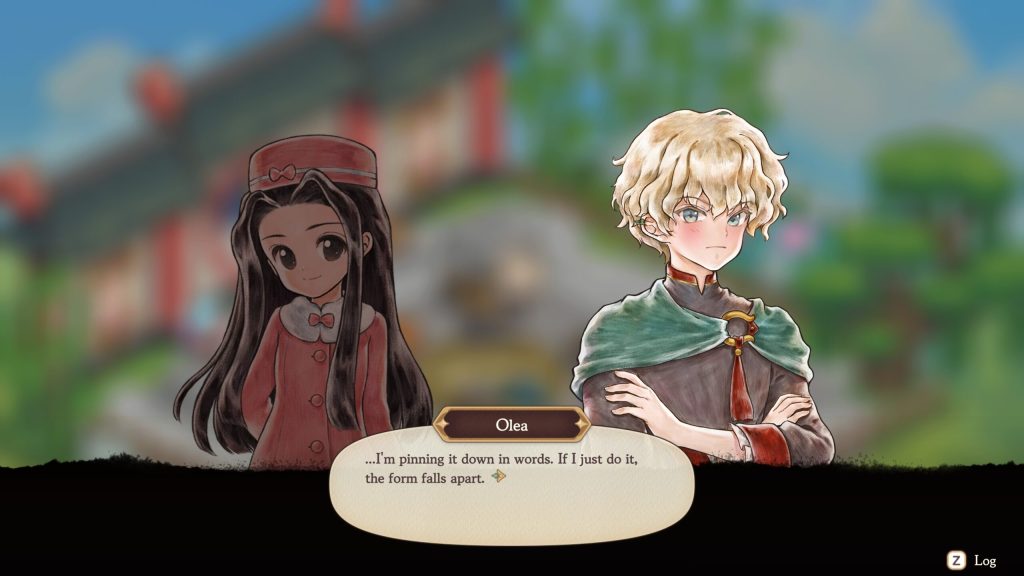
CoR is not all bad. It has absolute truckloads of art that is clearly superior to anything else in the genre. Now, granted, the art in these games is usually passable at best, but CoR has a consistently beautiful style throughout. The main character’s portrait changes every year as she ages, some of the outfits change with her, and nearly every event has a unique illustration. Jobs and classes are animated in a fun pixel style and every one of them takes place in a unique scene. The battle and adventure graphics still look like a budget RPG Maker game, of course, but you can’t have everything. It’s really baffling that they put so much effort into designing and drawing all these outfits only to make them statistically meaningless.

Finally, the characters and endings. These are each frustrating in their own way. The romance candidates are well-written and have satisfying story arcs, but they also have relatively few events and don’t offer any choices, so there’s no reason to ever engage with a character again after you’ve seen their ending. The endings have predictably fantastic art, but the only choice you’re given is whether to accept a marriage proposal from your chosen character. Most of these games let you choose from among the endings you qualified for so that seeing them all doesn’t require 70 playthroughs. CoR instead forces one one you using invisible priority rules. The only bone you get is a fortune teller who can let you know which ending is coming in exchange for a small fee, but there’s no escaping the secret rules once you’ve qualified for more than one. That is easily the game’s biggest flaw, but the weak ending rewards are not far behind. Each ending unlocks a card that can be used to get minor benefits on future playthroughs. This would have been a fine idea if you could use all your cards, but you only get three and many of them give bonuses that are hardly useful unless you want to get the same ending again. They each also fit into only one slot, so even if you do get one that you actually want, it might conflict with another. It’s a mess.
Conclusion
Princess Maker: Children of Revelation is a beautiful game that came a decade too late. If this had released in 2016, it would have been a welcome revival of a largely dead genre. As it is, it releases after a half dozen imitators have made the genre more interesting and convenient to play, but it hasn’t learned much from them. It’s also at least 50% more expensive than basically every competitor. As great as the art is, this is nearly impossible to recommend unless it’s heavily discounted and you’ve already played every similar game.
Rating: 65%
Time to beat: 3-5 hours per playthrough. Fast forward doesn’t skip much, so the difference is more about how much combat you do than whether you’ve played before.
Price: $35
Feel free to leave a question or comment below!
For more reviews, see my Steam curator page: https://store.steampowered.com/curator/43219041
Leave a Reply