Clair Obscur has developed a reputation as a mold breaking JRPG. Usually when a game is known for breaking its genre traditions, that means that it’s fused the mechanics from some other space to create a new gameplay experience. Clair Obscur is not that. There’s not really any single moment or system you can point to and say “this! this is what makes it special!” It’s a more subtle kind of innovation that builds up in small moments until at some point you realize that you haven’t really played a game like this before.
Now that I’ve made that claim, let’s start with the least innovative part: combat. It borrows its timed attacks from games like Paper Mario, its free shots from Persona 5, equippable passives that develop through combat from Final Fantasy VI, and so on. You may not have seen all of these systems together before or implemented exactly in the way that they are, but you’ll certainly recognize its core components if you have much experience with JRPGs. Still, that’s only really true for the first half of the game. Once you have access to the full cast and enough items to really start making custom character builds, there’s a good amount of depth to experiment and find fun combos. While it’s still a fusion of familiar systems even at the end, the sheer number of passives you can mix and match to build characters is enough to set it apart.

Clair Obscur‘s approach to exploration is also likely to look derivative at first glance. Dungeons largely consist of a path to a boss with optional areas branching off throughout, and the world map has your party directly walking around the space like in Final Fantasy VII or an early Tales of game. However, while most games understandably practically force you to find their best content so as not to waste developer resources on things most players won’t find, here the vast majority of interesting places require you to go look for them. A lot of coverage of this game focuses on the fact that you could beat it in 20-30 hours, but that’s only doable if you avoid nearly everything that’s not required. If you do that, you’ll miss out on obvious things like secret boss fights and upgrade points, but also entire environments, reams of unique equipment, minigames, quests, and even the latter half of each character’s personal story. Most shockingly for a JRPG released in 2025, there are even a couple dozen costumes and hair styles that you can find, for free, just by exploring the game. Once upon a time that was standard stuff, but after a decade of every other JRPG locking those behind individual $10 DLCs, it’s genuinely refreshing to see free outfits make a comeback.

For as much as I love exploring and as great as this exploration is, though, it’s ultimately the story that sets Clair Obscur apart. There’s been a lot of talk around it almost implying that other JRPGs are inherently immature for having too many teenagers and that this has come along to salvage the JRPG for grown ups, but that’s silly to me on numerous levels. There have always been JRPGs with adult characters, and for all the focus on being 33 in the game, it should be a big hint that they chose the 16 year old to be on the cover. What really sets it apart, beyond the fantastically written characters and expertly placed comedic relief, is how it takes the genre into a narrative space that it has hardly ever entered before.
Everyone knows the tropes: humble beginnings, looming big bad, power of friendship, and in the end you fight a god. It’s been done a million times because it works, and even games that otherwise tread new ground tend to end up fitting the standard plot skeleton. Clair Obscur starts off looking like another entry in this format, but it ultimately finds a way to keep the epic boss fights and ridiculously powerful abilities that define JRPGs while simultaneously delivering a story that is much subtler and more personal that the standard ‘kill the gods’ arc. Instead of just offering a slight re-imagining of a particular classic like most Western JRPGs, it tells a story that is distinctly its own while still clearly being part of this genre. To do something new in a space this old is impressive, but to deliver something this well made at the same time is remarkable.

That high praise out of the way, I’ll take a moment for where the game trips up. First, one of the minigames is terrible and should never have been included, but it’s optional and you don’t get anything important from it unless you just really want the associated achievement. The way combat develops will also be a disappointment for some people, because it’s quite easy to turn one character into such a powerhouse that nearly every fight ends before the enemies move by midway through Act 2. I didn’t mind this, and there are ways to avoid it ranging from just not making that build to enabling damage caps/HP modifiers in Act 3, but for some people it will no doubt be disappointing to know that it’s possible to nearly one shot even the super boss regardless of whether or not they personally use that strategy. Lastly, and most objectively, I had some occasional issues with sudden FPS drops that even more occasionally caused me to miss timing prompts. It’s possible that it was specific to my setup and I didn’t consider it a huge deal, but it’s worth mentioning.
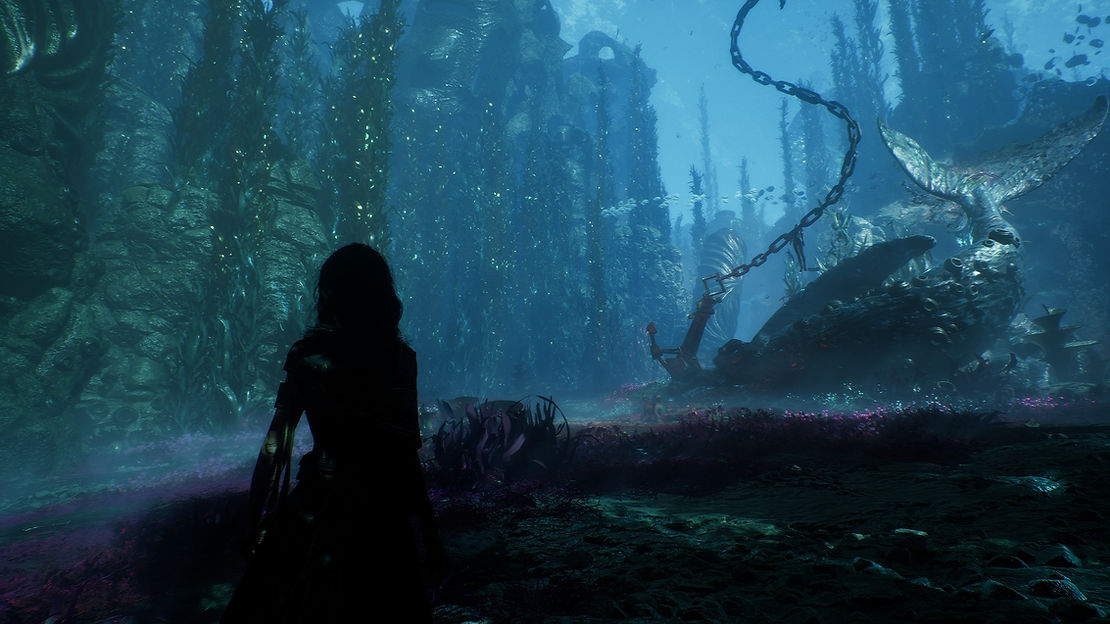
And finally, the art direction and music are nearly as praiseworthy as the story. The music mostly serves to set the mood for exploration and is often just present without being particularly noticeable, but it more than rises to the occasion when a moment calls for a standout mood piece or a battle needs atmosphere. As for the art, it’s a wonderful mix of familiar and bizarre throughout. The best environments feel like a journey through a surrealist painting, which is no doubt intentional, and even the plainer areas maintain an eerie beauty while still being functional to explore. And just like the music, when the environment needs a set piece, you’re going to get one. The backgrounds for the superboss and the finale in particular are fantastically done.
Conclusion
This conclusion is not going to surprise anyone. Clair Obscur is an expertly told story supported by a thoroughly entertaining battle system, exploration that is almost uniquely rewarding for its genre, and art and music that deliver in exactly the ways they needed to. It isn’t perfect, and no game of this scale ever will be, but none of its flaws meaningfully detracted from my experience. For anyone who cares about story or who plays JRPGs for anything other than the challenge of combat, this is undoubtedly a must play. For me, the score was almost inevitable. All that’s left now is to see if lightning strikes twice in 2025.
Rating: 100%
Time to beat: 52 hours to do essentially everything.
Price: $50 or Gamepass
For another good JRPG, see Yakuza: Like a Dragon Review
Feel free to leave a question or comment below!
For more reviews, see my Steam curator page: https://store.steampowered.com/curator/43219041


