Persona 3 through 5 are all 10 out of 10 games for me and are some of the only games I’ve ever come back to more than once. Metaphor isn’t technically part of that series, but it’s impossible not to compare them when it comes from the same team and has so much of its DNA in common. Unfortunately, the comparison is rarely favorable. This isn’t by any means a bad game, but it’s nonetheless a step down from its precursors in just about every important way. Even though I don’t regret playing it, it’s just about guaranteed to be the most disappointing game I play this year.
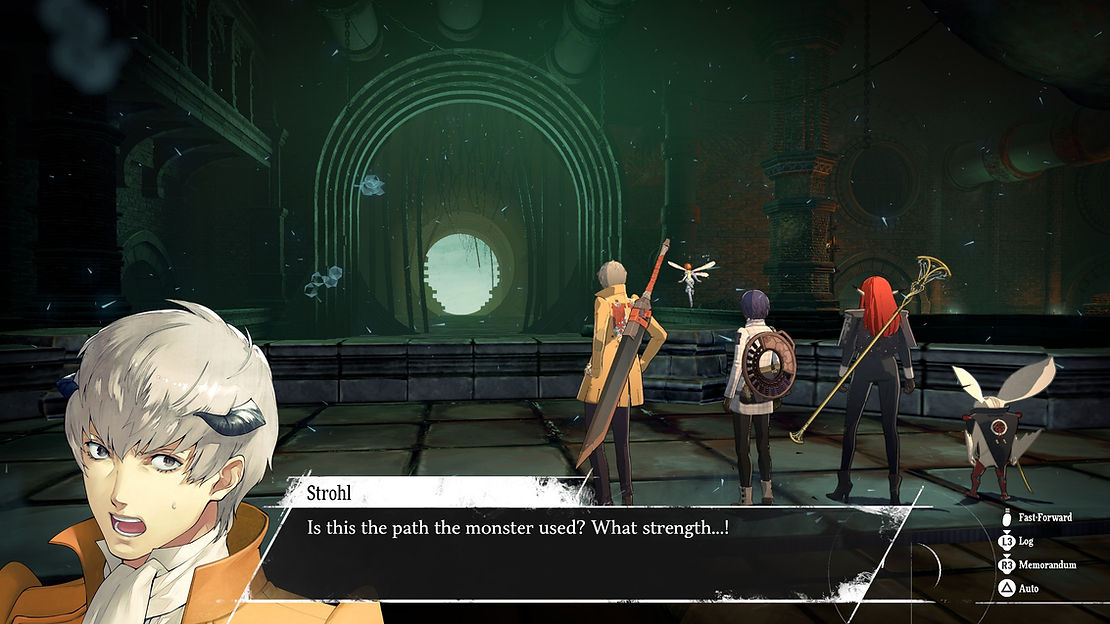
How did it get there? The biggest problem is, by far, the cast. Persona is made by the strength of the core party and the chemistry between the characters, but Metaphor hardly has any of that. I spent 60 hours on my playthrough and would struggle to describe the relationship between any pair of the main party members. Some of them are just underdeveloped overall, but the bigger issue is that they hardly ever interact in any meaningful way. There are interesting dynamics between just about every pair of characters in any given Persona game, but Metaphor‘s cast barely even speaks to each other unless it’s through or about the protagonist. This all caps off in what is supposed to be a touching moment of one character overcoming his prejudices in regard to another in the final 30 minutes of the game, but it’s rendered flat by the fact that conflict hadn’t been brought up at all since the pair were introduced.

Sadly, the characters in the equivalent of social links are hardly any better. Even the weakest Persona SLs give the character a personal conflict to overcome and grow from, but Metaphor forgets that basic element of writing half the time. The party member SLs are particularly bad because any character growth, assuming there was any at all, happened in the main plot, so their stories start with them already being perfect and usually end with them solving a problem in a tremendously predictable way. Non-party characters do a little better since they’re allowed to have flaws and improve themselves, but even these are generally too trite to be memorable with morals like “stealing is bad” and “don’t build dangerous weapons just because”. I do like that they’ve made links guaranteed to advance every time you hang out with a character, though. It removes some of the guide-bait from previous games where choosing the wrong option a couple of times could lock you out of seeing the end of a character’s story.
The plot at large is at least written better than the characters. The core idea of a medieval magical popularity contest to elect a new king is interesting and there are some scattered moments of clever worldbuilding. It’s all pretty serviceable, if about as subtle as a freight train. The theme of this game is “anxiety” according to the developers, and you will know that because every other word is “anxiety” in the last quarter of the game. The opening cutscene shows a man bribing a church official and then cuts to another man cursing out a beggar, and that’s about the level of subtlety that you can expect from the whole game. It’s supposed to be a fairy tale, so absolutely smashing you over the head with the message is certainly on-brand, but even then it might go too far. It also tries to cram far too many plot twists into the last 10 hours, so it turns into a soap opera with everyone betraying everyone and many fake deaths.

Gameplay fares the best of all the parts of the game, although it’s still somewhat of a mixed bag for me. I really like the idea they’re going for by having a job system instead of personas, but locking both class progression and skill inheritance slots behind social links that are themselves locked behind the plot was a huge mistake. Say you want to have a Merchant in your party – you’ll unlock the basic class fairly early on, but you won’t get access to its upgraded version until the last month of the game, and even progressing it enough to unlock additional skill slots will take until the next chapter. There’s no way to know where these gates are in advance and most classes have access to a very narrow pool of skills by default, so it’s pretty disappointing if you’ve wasted your time on one that turns out to be locked for who knows how long. This would have worked much better if social links only unlocked the initial class and all further progression happened through leveling up or items. As it stands, some classes are clearly better than others for much of the game simply because you’re actually allowed to progress the relevant link.
Beyond swapping personas out for a job system, the flow of battle is also radically different. You now have a dodge skill in the overworld and only enter turn based battle after attacking if the enemy is near your level. Once in battle, you have turn icons that control how many actions you get. Everything takes one icon except for special combo actions, which take two, and passing, which takes half, but the cost is reduced by half if you hit an enemy weakness or get a critical hit. The icons are really close to being a good idea. On the player side, it’s held back by the fact that you can lose 2-4 icons if you happen to hit an enemy resistance or reflect, which is absurdly punishing considering you’ve already done no damage and likely had a character KO’ed if damage was reflecting. More problematically, later bosses like to spam moves that give them a ton of extra icons. This isn’t much different than the boss just using a super attack in terms of difficulty, but it means you have to sit through a boss attacking up to 8 times in a row. Even with sped up animations it takes far too long and the movepools are so small that the boss is often using the same move multiple times anyway. It seems like they wanted to go for something like the Octopath Traveler battle system where actions are a currency that you need to spend carefully, but it’s just not very interesting because of how much better it is to hit a weakness than do anything else.
Lastly, music and graphics. They’re fine. The game broadly looks pretty good and actually has some really excellently drawn optional viewpoints, but an overeliance on recolored enemies and narrow corridors means that a lot of the game can’t take advantage of the game’s graphical prowess. The music is a lot of chanting. Some of it is pretty catchy, but there’s nothing here that can match the masterpieces in the Persona soundtracks. This is probably the part of the game that’s most held back by weight of expectations. If this soundtrack had come from some random guy, I’d probably be pretty happy with it. Instead, it’s hard not to be a little disappointed with it in comparison to Meguro’s previous work.
Conclusion
As negative as I’ve been here, I really don’t think that Metaphor is a bad game. Much of what’s wrong with it is really a problem of what’s not in the game. Combat would have been better with more and more varied skills so that battles were less repetitive. The cast would have been more memorable with more scenes showing them interacting with each other. Some things, like social links, needed a lot more work than others, but even then I can at least see what they were going for. I’m sure there were teething pains from designing a medieval fantasy game for the first time and that some of these elements would be more fleshed out in a sequel. Here’s hoping.
Rating: 75%
Time to beat: About 60 hours to do everything except the arena on lowest difficulty. Higher difficulty seems to add a lot of extra time.
Price: $70
For another Persona spinoff, see Persona 5 Tactica Review – A Slow Buildup
For more reviews, see my Steam curator page: https://store.steampowered.com/curator/43219041


