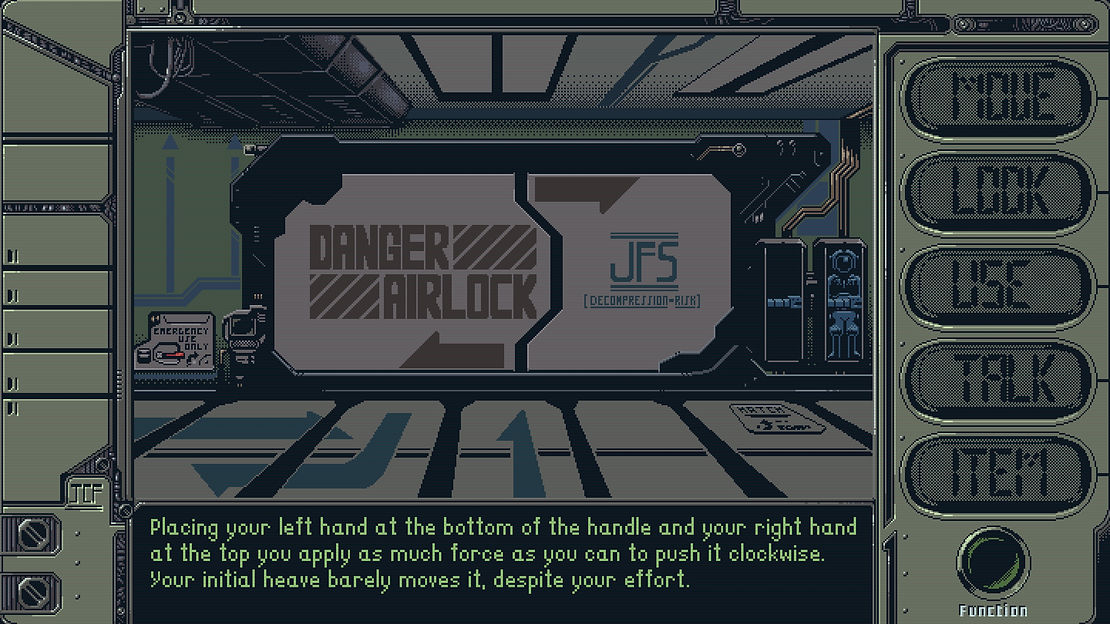
The title says it all here. The traditional Top 10 list is coming a little later, but for now I want to talk about 10 others that are interesting despite not being as good as the top 10. Some of them aren’t very good at all, and others have major flaws that ruin an otherwise solid experience. All of them stood out for some reason. The ranking is vaguely in descending quality order, but this isn’t 11-20 of an extended list.

1 The Chef’s Shift
Although this isn’t a 11-20 list, The Chef’s Shift would be pretty close to 11 if it was. It’s a blend of Cook, Serve, Delicious and Diner Dash that emphasizes the restaurant management and has a surprisingly extensive and well-told story. It might have made the real top 10 with a slightly better translation and small improvements to the balance and art, but it’s easily worth checking out as-is.

2 The Roottrees are Dead
I couldn’t decide if this game should count for the regular Top 10 since half of it is a remaster, so I put it high on the backup list instead. It’s probably the most self-selecting game of the year because it’s basically the same experience as filling out your real family tree on a genealogy website if your family was famous and dysfunctional. If reading snippets of old newspapers to find out if long-dead Uncle Bob had an affair sounds fun, you’ll love this. Just make sure to stick around for the New Game+ mode – the standard game is best thought of as an extended tutorial for the real puzzle.

3 Promise Mascot Agency
Every Yakuza management minigame is described as being good enough to be its own game, and PMA did what RGG team won’t by actually making one of them into a full game. PMA nails the setting with a huge island full of quirky characters and fun secrets to discover, but desperately needed more depth to the actual mascot management minigame. The business side of the experience is completely trivialized by having even a small fraction of the sidequest bonuses unlocked, and being constantly interrupted to micromanage your mascots anyway is a drag on an otherwise fun time.

4 Cauldron
It’s a little ironic that I’m giving Cauldron a spot here even though I didn’t review it because I didn’t have enough to say. This is a quasi-idle game where you play an assortment of minigames to set high scores, and then you passively earn the average of your last handful of scores as resources every so often. You can use those resources to upgrade your minigame abilities and earn higher scores, make the passive generation run faster or use a smaller number of scores in the average, or, most importantly, strengthen your characters so that you can win JRPG battles and explore more of the overworld. You’ll eventually find and defeat the final boss, at which point you can do it all again with a variety of modifiers. Cauldron is on this list instead of the Top 10 because even though I enjoyed it a lot, this just isn’t the kind of game I remember after I turn it off. If you’re more into numbers-go-up experiences, though, this is an almost perfect implementation.

5 Stories from Sol: The Gun Dog
2025 had a surprisingly large collection of games that tried to emulate classic Japanese adventure games. None of them fully lived up to my expectations, but Stories from Sol came the closest. It’s a classic mech anime as an adventure game and has a plot that offers an impressive number of meaningful choices considering that it always ends up in pretty much the same place. It felt liked it ended right as things were coming together, which is why it’s here, but there is at least a NG+ with a few small changes that extends the playtime by an hour or two.

6 Starvaders
Starvaders is not the first game to blend card roguelites with a tactical board game, but it is the first I’ve played to make the combination work. Previous games suffered from feeling like they were just Final Fantasy Tactics with annoyingly complicated movement rules. Starvaders ditches the FFT inspiration for a Space Invaders-like experience where you have to stop a river of enemies before it reaches the bottom row and deals damage. Moving your character is still more involved than in a normal tactics game, but the focus is now on the puzzle of using your cards to take out enemies as efficiently as possible instead of just chasing them around the board. The higher difficulty modes don’t really make the game more interesting and some characters feel much weaker than others, but it’s one of the year’s best experiences when everything comes together.

7 Little Problems
Little Problems is a bunch of logic puzzles centered around a few average days for an average college student. There’s not much of a plot and you’re not solving any grand conspiracies. Instead, you’re exploring fun backgrounds to find clues that tell you whether that Character A is the one who is in the botany club and Character C is the one who got a D on her report. It makes the list because making this sort of logic puzzle into a whole game is relatively unique and it’s executed well, but I have to admit that you probably won’t remember much of it after a month. Does that still count as an interesting game? It’s worth playing, at least.

8 Atelier Yumia
Atelier Yumia has plenty of faults, but you can’t accuse it of just being another game in a long-running series. It attempts to bring open world gameplay, a much darker story, and radically simplified crafting to the Atelier formula all at once. Putting aside the crafting system changes, which were a horrible idea that completely undermines the point of this series, everything it tries to do is interesting and you can see where they were going. The open world is a little too basic and repetitive, but adding exploration abilities and construction to the alchemy pool is a promising idea. The story is the first time I’ve seen this series have actual antagonists instead of just an amorphous doom to challenge, and while pacing issues stop it from fully landing, it’s a promising approach for a series that has otherwise stuck to telling a lot of very similar stories.

9 Urban Myth Dissolution Center
Stories from Sol made this list instead of the Top 10 because it never properly got going, whereas UMDC is here because it flew into the sun. Not too close to the sun, just smack into it.
The game puts its best foot forward by dropping you right into the best of its six cases and showcasing its gorgeous pixel artwork and evocative soundtrack. Chapter 1 is nearly perfect, and anyone who just plays that will probably think I’m insane for scoring the game so low. Alas, while the next few cases are solid, UMDC never quite reproduces the magic of chapter 1 again. Just when you think things might be coming together into an amazing ending in the final case, it reveals one of the dumbest plot twists I’ve ever seen and wrecks the experience. I’d still recommend playing it on sale for the first mystery, but you’ll have to be able to accept an early peak and calamitous ending to fully appreciate the game. Hopefully the team’s next outing sticks the landing.
10 Pokemon Legends Z-A
Pokemon Legends: Arceus is my favorite game in the series. By ditching the traditional gym challenge for an open world that made the player into a frontier naturalist, it finally made completing the Pokedex feel like a real in-world achievement instead of just busywork for the professor. I had high hopes for Z-A to bring that formula into a new setting and time period, but Game Freak instead delivered one of the blandest city maps since the PS1 era and just about completely removed any sense of exploration by cramming all the Pokemon into tiny wild areas. A few fun boss fights against Rogue Mega Pokemon are just about the only bright spots in a game that otherwise features dull characters, simplistic gameplay, and a final boss that amounts to just mashing buttons against the same two generic enemy designs for 20 minutes. It’s easily the most disappointing game of the year, and I still can’t be bothered to get a screenshot from it.


