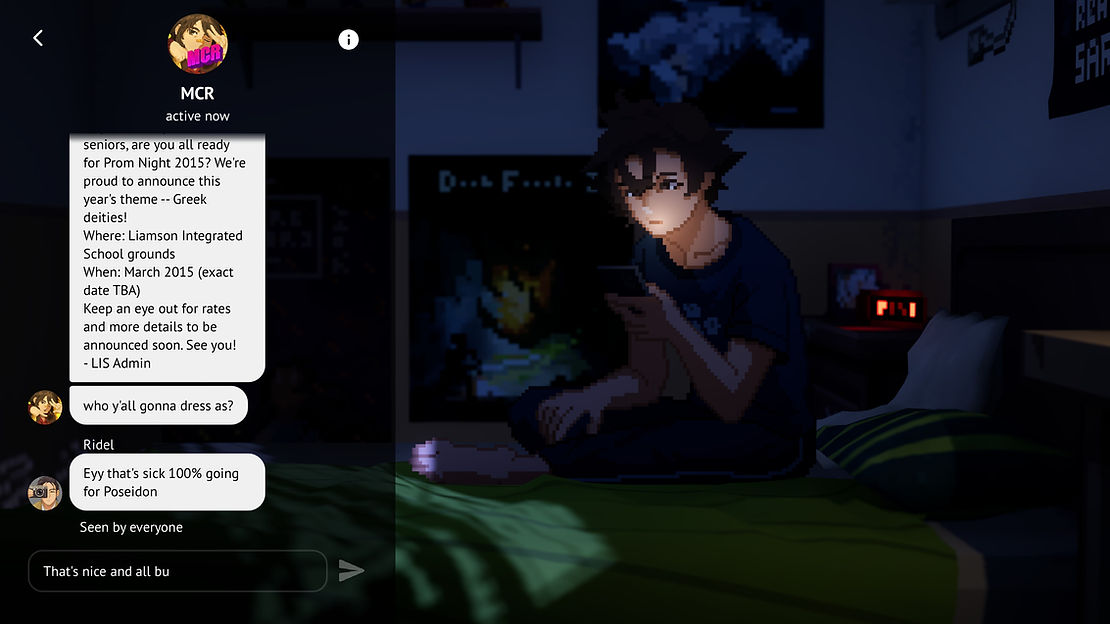
It’s pretty incredible that Until Then comes from a developer that has never released a game on Steam before and a publisher that many people have likely never heard of. It’s far from the first amazing game I’ve played that got no pre-release fanfare and came from somewhere totally unexpected, but these sorts of games are supposed to fit a certain mold. They’re usually only a few hours long and don’t have the budget to do much more than what’s absolutely necessary in terms of presentation. Until Then is as good as any of those games, yet it’s also 20 hours long and packs an absolutely mind-boggling amount of detail into every scene. The result is something truly special.
I’ll get the one negative out of the way early: there are a lot of minigames here, and they range in quality from slightly quirky to nonsensical. This might have impacted my rating if the minigames had consequences, but as far as I know you can completely flub all of them and at most an NPC comments on how you did. Although I’m sure it would have been an even better experience if the minigames were more fleshed out, they didn’t hurt the experience as is. It helps that nearly all of them have a story reason for happening, so you’re getting dialogue alongside the gameplay instead of just playing a dumb flash-esque game to pad the runtime.

Next, the art. It’s hard to fully appreciate from the static screenshots on the game’s store page. You can tell that it’s great pixel art, but you can’t see how much Polychroma was able to do with animation and dynamic camera angles. Even though most things are done with sprites, the characters and backgrounds are as expressive as most high-budget 3D games, which makes every scene feel that much more alive and allows for some excellent subtle storytelling. I’ve seen many games with unbelievably detailed pixel art backgrounds and static sprites, but none that come close to this when it’s all put together.
The dialogue systems are also impressive. These were apparently inspired by Oxenfree and Night in the Woods, which are two great games to learn from. It doesn’t have the same depth of conversation trees that Oxenfree did, but it achieves a similar liveliness in its dialogues by varying the timing and presentation of your options and through great writing regardless of your choices. You’ll also spend a lot of time talking to friends by text, where you’ll often end up writing and deleting several messages before pressing send. It’s a small touch that lets Polychroma show more of their character’s personality while also making text conversations feel far more real. No one actually writes and sends the first message they think of every time, after all.

Although this is ultimately a linear game, it also remembers a surprising number of the choices you make. You’re not going to end up with different endings, but characters will call back to choices you made at important moments and sometimes even trivial things will have consequences. I was particularly entertained by receiving an angry message from a minor NPC whose picture I’d opted to share. It’s a nice way of adding some player agency without needing to shoehorn in choices or endings that don’t fit the characters.
Of course, what you’re really here for is the story. And look, even lower-scoring reviews of this game call the narrative a masterpiece. There’s really no other word for it. It has a large cast, but everyone has a meaningful role, a unique personality, and their own believable motivations. The only games I can think of that realized their casts this fully are the Persona and Mass Effect series, but those had far more time to work with and were still full of less fleshed-out hangers on. I got truly invested in these characters and their problems, and that makes the story beats hit even harder. Still, probably the biggest compliment I can pay to the story is that I’d still be giving this a perfect score even if it had ended halfway through after the first time it shows credits. You get an absolute gem of a story only for the game to go “but wait, there’s more!” and then get even better.

Conclusion
I could keep going on and on about what an exceptional game Until Then is. There are tons of clever details and moments I haven’t even mentioned yet, and I didn’t say anything at all about the music. Instead of making this review take an hour to read, though, I’ll wrap it up with a simple recommendation: If this sort of game interests you even a little, Until Then is absolutely a must-play game. I’d never heard of Polychroma prior to this game and have no idea how they pulled this off for their first game, but I’ll be eagerly waiting for whatever they do next.
Rating: 100%
Time to beat: About 20 hours
Price: $20
For a similar game, see A Space for the Unbound Review – Perfection in the Imperfections
Feel free to leave a question or comment below!
For more reviews, see my Steam curator page: https://store.steampowered.com/curator/43219041


